
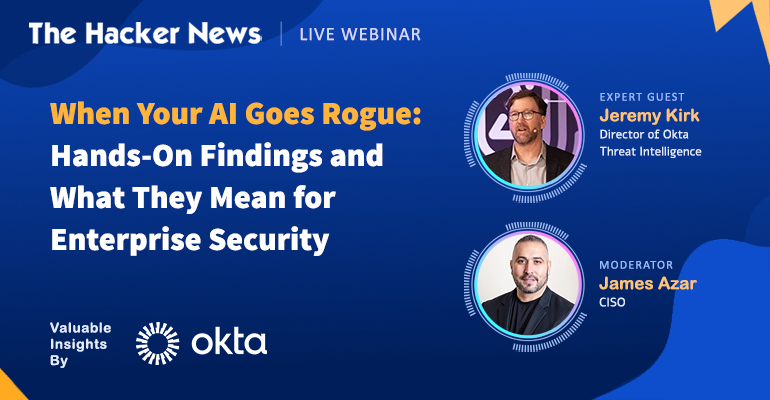
When Your AI Goes Rogue: Hands-On Findings and What They Mean for Enterprise Security

Securing the AI Attack Surface: Practical Guidance for Safe Adoption

Sign Up Now
Join the Webinar
loader
About this webinar

As AI scales, guardrails alone are not enough. In this webinar, Jeremy Kirk, Director, Okta Threat Intelligence, shares learnings from hands-on testing of OpenClaw to show how agentic AI can expose credentials, bypass safety controls, and become a dangerous attack surface.

We'll translate these findings into practical guidance for safe AI adoption at scale: treating AI agents as first-class identities, enforcing least-privilege access, using short-lived secrets, and spotting risky shadow AI usage. See real-world examples of how attackers are abusing AI agents and get concrete mitigation steps you can implement today.

Key Takeaways

  • The Law(lessness) of the Claw: Deploying AI tools such as OpenClaw introduces multiple exposure risks, from exposing secrets to bypassing controls.
  • Identity-Centric Governance Foundations: The AI age doesn't necessarily mean throwing out conventional security wisdom. Learn why AI agents need to be managed as identities, follow least-privilege access, and have robust logging and auditing.
  • Visibility and Control: Agents should never be allowed to go rogue. Safely deploying AI means getting visibility into what agents exist, understanding their levels of access, and being able to throw the "kill switch" to shut down agents if needed.

Don't miss your chance to gain practical guidance you can apply today to secure AI deployments at scale.